Finding the right vehicle tuning training path doesn’t have to be a struggle. In this guide, you will learn how to navigate the maze of available tuning courses, understand different learning options, from online modules to hands-on workshops, and discover which route aligns with your current skills level and future business goals. Whether you are a seasoned vehicle technician adding a new service, or a complete beginner, we will help you identify the steps needed to launch a successful career in ECU remapping or to develop your existing business.
Defining Your Goals and Understanding Your Starting Point
Before you can choose a vehicle tuning training path, it’s helpful to understand where you’re starting from and what you want to achieve. Most people interested in learning to tune vehicles fall into one of three groups.
The Ambitious Beginner
Perhaps you are a car mechanic or run a garage. You’re comfortable with the spanners and have a solid understanding of how cars work, but the world of ECU remapping is new territory. Your goal is likely to introduce a new, profitable service for your business. You need a path that builds on your existing technical knowledge, teaching you the sound fundamentals of tuning safely and effectively, without overwhelming you with computing and software jargon.
The Intermediate Tuner
You might already have some vehicle tuning experience. Maybe you’ve used a particular tuning tool to apply pre-made files but now you want to go deeper. You’re looking to thoroughly understand the changes and adjustments you are making, and perhaps expand your skills to a second or third tuning tool. Your path is about deepening your expertise, understanding clearly the theory and underpinning knowledge, and gaining the confidence to work on a broader range of jobs and vehicles.
The Experienced Professional
You are already a proficient tuner, comfortable with two or more tuning tools and platforms. Your objective now is to take this knowledge to the next level. You may be looking to work with advanced tuning software or tackle complex or specialist subjects like heavy commercial vehicles or emissions solutions. Your path likely involves advanced, hands-on in-person courses that offer direct access to top-level knowledge and specialised equipment, and the chance to ask detailed questions and engage in expert discussion.
Exploring Your Training Options
There are different ways to learn, each with its own merits. The best vehicle tuning training path for you will depend on your budget, learning style and learning goals, and long-term ambitions.
Formal Education
Some people begin their technician career with a formal education or apprenticeship in automotive engineering or as a mechanic. While these qualifications can provide an excellent general training and solid foundation, they rarely cover the specifics of ECU remapping, tuning, and calibration.
Specialised Online Vehicle Tuning Training Courses
Online tuning training courses are a popular and effective way to learn. They offer the flexibility to learn at your own pace, wherever you are in the world, and to study at home or in your workshop. A good online car tuning training programme will provide structured modules, clear explanations and clear examples, and access to support when you get stuck. This is an excellent way to develop your knowledge on the theoretical side of tuning, to understand different software platforms and how to operate them, and to learn the principles of modifying maps safely.
In-Person, Hands-On Training
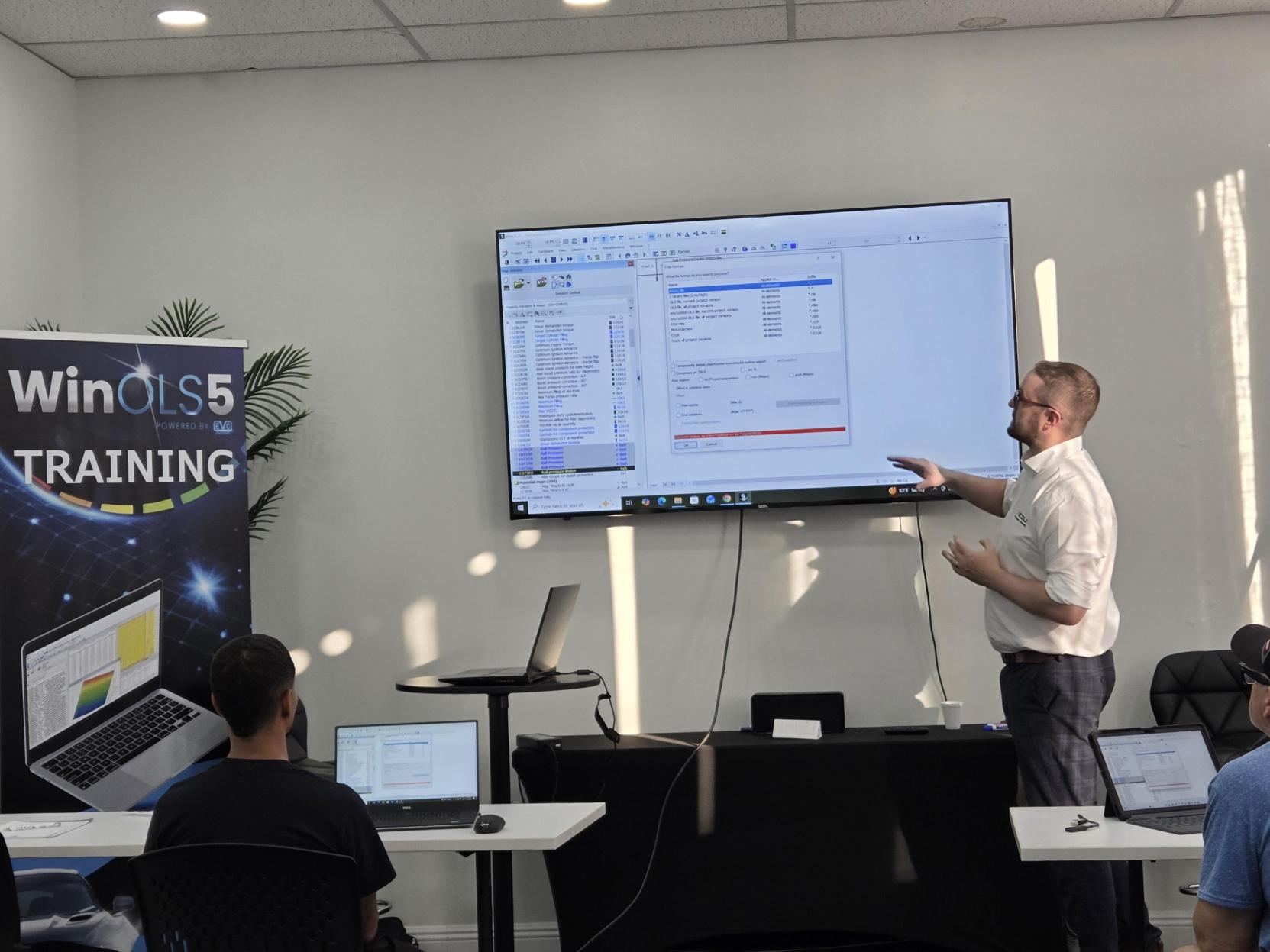
For some people, there is no substitute for learning hands-on in a workshop environment, with the chance to talk with an experienced trainer and to ask questions as you go along. In-person tuning training allows you to work directly with expert instructors and to use professional-grade equipment. The possibility to apply what you’ve learned on a real vehicle, to experiment, and to see the results instantly on a dynamometer is a vivid learning experience. The skills and understanding will stay with you. This path is particularly suited for those who want to accelerate their learning, gain practical, real-world experience, and to get the confidence to tackle advanced jobs.
How to Choose Your Vehicle Tuning Training Path: Key Factors to Consider
When you start comparing tuning courses, it’s easy to get lost in details. Focusing on a few key factors can help you make a clear and informed decision.
Course Curriculum and Content
Look closely at what the course covers. Does it align with your goals? A programme for a beginner should start with the basics of power, torque, engine management and ECU fundamentals. An advanced course should offer deep dives into specific software, different techniques for different fuel types, different Stages of tuning, and emphasise structured approaches and strategies. The curriculum should be logical, well-organised, and clear about what you will be able to do upon completion.
The Tools and Software You Will Learn
The world of tuning involves different tuning software and different tools. Consider what tools are prevalent in your market and your vehicle specialisms, and the user-friendliness or complexity of the different tools and platforms. It can be a good business strategy to have at least two tools, to tackle a wider range of work. Also, tools can sometimes be used effectively in combination. Whether you are looking to master WinOLS 5 for intricate file modification, or prefer the AI-assisted workflows of StageX, a ‘platform-neutral’ training provider that offers courses across the entire range of tools and software gives you more choice, a broader skill set, and more flexibility.
Useful tuning tool and software articles and videos:
- The Benefits of Using WinOLS and StageX Together
- Webinar: Alientech ECM Titanium – Gasoline tuning – Map Writing Software in Action
- Webinar: How to Write your own Map Pack with WinOLS5
Practical Experience and Support
Theoretical knowledge is only half the battle. The real learning happens when you start applying it. Does the training provider offer practical support? This could be, for example, a high-quality file service, backed up by telephone support, where you can get technical advice from real tuning experts. For online training, it can also mean access to instructors for questions, an online community forum, or live online support sessions or Q&A sessions. The best training providers offer ongoing support long after you have completed the course.
Cost and Time Commitment
Training is an investment in your future, so it’s important to consider the costs. These can range from a couple of hundred pounds for an introductory online module to several thousand for a comprehensive, in-person training programme.
If you are looking to book, checking for upcoming training events is a great first step. VIEZU Technical Academy often runs special deals or Early Bird discounts for early booking, so it’s always worth enquiring. Don’t be afraid to contact the VIEZU Technical Academy sales team on +44 (0) 1789774444 to discuss your specific requirements or to see if any places are available on a course that appears to be full.
The Biggest Mistakes to Avoid and Our Best Advice
We’ve seen thousands of students start their journey, and two things stand out.
What is the single biggest mistake you see beginners make?
The most common mistake is choosing a training provider based solely on the lowest price. Many cheap online courses offer a superficial overview, providing files without teaching the fundamental principles behind the tuning changes. This approach is not only ineffective but dangerous. It can lead to costly engine damage and a reputation for poor quality work before you’ve even properly started. True expertise comes from understanding the ‘why’, not just the ‘how’.
What is the most important piece of advice you would give to tuning beginners?
Our most important piece of advice is to view training as a long-term investment, not a one-time purchase. Look for a training partner that offers genuine, ongoing support after the course has finished. The real learning begins when you start working on vehicles independently. Having access to a team of experienced professionals you can call on for advice, file checks and technical support is invaluable. It’s the single most significant factor in turning your training into a successful and profitable career. With the VIEZU Technical Academy you’re working with a group of experts who work on tuning vehicles every day. Because we are at the forefront of the tuning industry, we teach you the very latest and you learn from experts who have experience with all of the tuning tools and software, and with a very wide range of vehicles, which helps you to avoid costly mistakes.
Why Choose Remap 101?
Remap 101 is the online home of the VIEZU Technical Academy (VTA), an Institute of the Motor Industry (IMI) Approved Training Centre. Choosing a training partner is about more than just a single course; it’s about building a foundation for your future success.
When you train with the VTA, you benefit from the wider experience of the VIEZU Technologies group. This means you don’t just get a certificate at the end. You get genuine, ongoing support from expert file writers and technical advisors who are there to help you grow your business long after your initial training is complete.
Our training provides a complete journey. We support absolute beginners taking their first steps and guide experienced professionals through advanced software and specialist topics, from performance petrol engines to complex emissions solutions for commercial trucks and agricultural machinery. Regardless of where you start, we have a vehicle tuning training path designed to help you succeed.
Our in-person courses in the UK that are held at the VIEZU Technologies HQ in Warwickshire, UK, provide an unmatched experience. What sets our training apart is the access to professional equipment; many of our courses involve hands-on experience with our 3000hp Mustang MD-AWD-500 dynamometer, one of only a few in the UK. This state-of-the-art machine allows you to see the real-world impact of your tuning in a safe and controlled environment.
You can learn more about our Expert Dyno Tuning Courses at our UK Workshop to see how this practical experience can accelerate your learning. We have also expanded our hands-on global tuning training to include a full programme in the USA and events in Dubai.
New for 2026, and a training offer that is unique to VIEZU, is multi-language online tuning training courses. The extensive range of Remap101 tuning training online modules has been translated into eight world languages. A full range of WinOLS online training courses in all eight languages was launched in January 2026, and multi-language modules in other software and platforms will be made available as we go through 2026.


View our free vehicle tuning training
View our beginner vehicle tuning training
View our intermediate vehicle tuning training
View our advanced vehicle tuning training
How to Choose Your Vehicle Tuning Training Path Frequently Asked Questions
Do I need to be a mechanic to learn vehicle tuning?
No, you don’t need to be a mechanic to learn vehicle tuning, but it can help. A solid understanding of engine fundamentals is crucial for safe and effective tuning. Many successful tuners come from IT or engineering backgrounds. A good training course will teach you the necessary mechanical principles.
What vehicle tuning tools do I need to start learning?
To begin, you will need a reliable laptop and a stable internet connection for online learning. As you progress, you will need a slave tuning tool to read and write software to a vehicle’s ECU and eventually a master tool and software licences for editing files.
How long does it take to learn vehicle tuning?
The time it takes to learn vehicle tuning depends entirely on your background and the time you are able to dedicate to learning. You can learn the basics in a few days on an intensive course but mastering the craft can take years of continuous learning and practice. The journey of a professional car tuner is one of constant refinement and skill development.
Can I learn to tune my own car?
Yes, you can learn how to tune your own car. Many people start their car tuning journey by tuning their own vehicle. It can be a very rewarding way to learn, as it allows you to apply your knowledge and see the results first-hand. However, it’s vital to proceed with caution and follow a structured vehicle tuning training path to avoid costly mistakes.
Can you teach yourself to tune cars?
Yes, it is possible to teach yourself how to tune cars, but the learning curve is steep and the risks are high. Many enthusiasts start by reading forums and experimenting on their own vehicles. However, trial and error is a dangerous teacher when a single keystroke can destroy an engine. While you can learn the basics alone, professional training significantly accelerates the process. It bridges the gap between guessing and knowing, ensuring you understand the why behind the changes, which is essential for safely tuning modern, complex ECUs.
How to become a car tuning specialist?
Becoming a car tuning specialist requires a combination of structured learning and hands-on experience. Start by building a solid foundation in engine mechanics and ECU principles. From there, invest in high-quality tuning tools and software (like a slave tool to start) and practise on a variety of vehicles. True specialisation often comes later; you might choose to focus on a specific marque (like BMW or VAG group) or a specific sector like heavy-duty commercial tuning. The key is continuous professional development; the technology moves fast and successful specialists never stop learning.
What are common vehicle tuning mistakes?
The most common vehicle tuning mistake we see is “copy-paste tuning” where someone uses a generic file that they have found online without understanding if that file is going to be suitable for the specific vehicle or software version they are using. This often results in poor driveability, excessive smoke or limp mode.
Another frequent error is over-tuning: pushing components like the turbo or injectors beyond their safe limits in pursuit of peak numbers, rather than focusing on a smooth, reliable power delivery. Finally, neglecting vehicle health is a major oversight; you should never tune a car that has underlying mechanical faults, as the increased stress will only accelerate failure.
About The Author
Paul Busby is the CEO of Remap101. Paul is responsible for overall business growth and operations. He is an experienced vehicle engineer specialising in post-production defect investigation, new vehicle derivative homologation and warranty development. Winner of Entrepreneur of the Year 2012 and The Queens Award for VIEZU in 2014, he can usually be found getting his car fixed in the VIEZU workshop or showing-off the F-Type Predator 670 BHP to customers.


