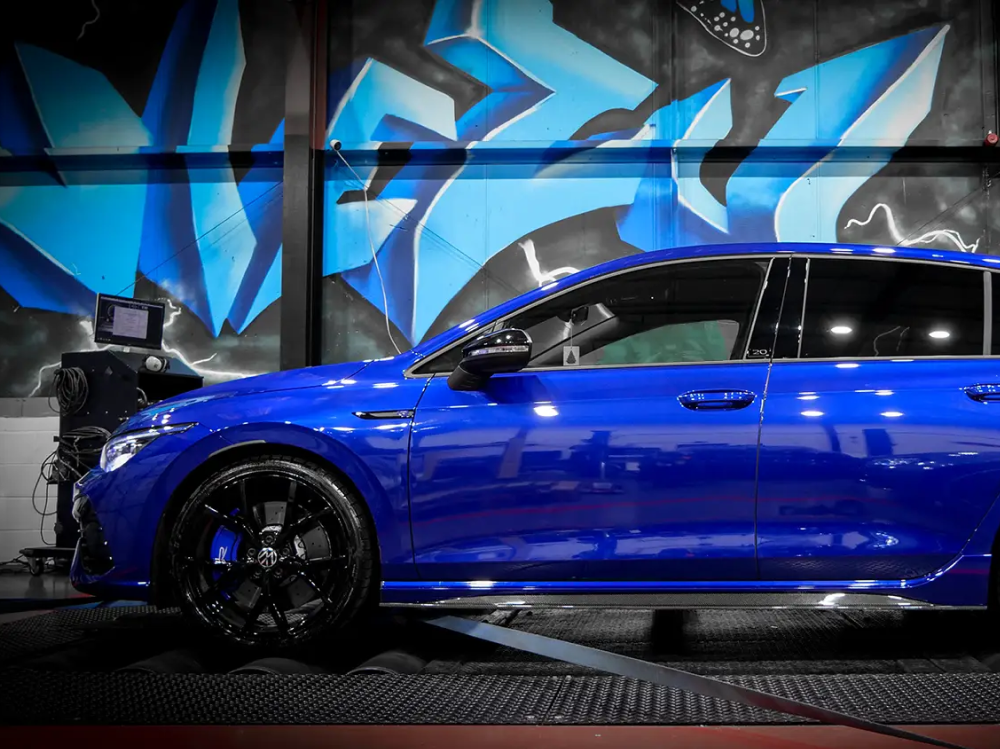
If you’ve been in the trade or just love cars, the dominance of ECU remapping isn’t exactly news. After all, digital calibration has been standard practice for decades. But while the tech itself is familiar, the motivation behind vehicle tuning seems to be shifting as we reflect on vehicle tuning trends 2025 and head into 2026.
It feels like we’re moving past the days where it was solely about chasing peak horsepower or dialling in aggressive ignition timing. Instead, there appears to be a trend towards ‘eco-modding’, and optimising maps for economy, thermal efficiency and longevity rather than just raw numbers.
Perhaps it’s down to tightening regulations on extreme mods, but the modern scene is adopting a subtler approach. It’s becoming a balancing act, getting that compliance-focused calibration right while putting a renewed emphasis on high-quality accessories and visual customisation.
This guide explores some of the vehicle tuning trends that we have seen in 2025.
Advanced ECU Remapping for Combustion Engines
While EVs are on the rise, petrol and diesel engines are far from obsolete. ECU remapping remains one of the most effective ways to boost their performance and efficiency.
Stage 1, 2, and 3 performance tuning continues to be a primary motivator for car enthusiasts. By modifying the ECU’s software, tuners can optimise fuel-to-air ratios, turbo pressure and ignition timing to unlock more horsepower and torque. These modifications are often categorised into stages:
Stage 1
A software-only remap with no hardware changes.
Stage 2
Typically includes hardware upgrades like performance exhausts and induction kits to complement the software changes.
Stage 3
Involves more substantial changes such as larger turbos or intercoolers for maximum power gains.
Performance Tuning vs Eco-Tuning: A Balancing Act
One of the most significant trends is the growing demand for tuning that doesn’t just add power but also improves efficiency. Drivers no longer see performance and economy as mutually exclusive. This has led to a split in tuning focus.
Performance tuning remains popular for enthusiasts seeking the ultimate driving experience. A performance remap adjusts the ECU’s parameters to increase horsepower and torque resulting in faster acceleration and a more responsive engine. It is perfect for drivers who feel their vehicle is a little sluggish and want to tap into its full capabilities.
On the other hand, eco-tuning is gaining traction among drivers conscious of fuel costs and environmental impact. This type of remap optimises the engine’s software for fuel efficiency. By improving how the engine burns fuel, drivers can see a significant reduction in consumption making it an intelligent investment for daily commuters and fleet operators.
Exploring Other Vehicle Tuning Trends for 2025
While software is at the forefront, hardware modifications remain a popular way to personalise a vehicle. These trends often complement the work done through ECU remapping.
- Performance exhaust systems are a common upgrade. They can improve airflow, reduce back pressure and give the car a more aggressive sound.
- Suspension upgrades such as lowering springs or coilovers not only give a car a sportier stance but also improve its handling and cornering ability.
These physical upgrades when combined with a professional ECU remap give you a unique and high-performing vehicle.
A Look at Global Vehicle Tuning Regulations in 2025
Understanding the international tuning market means looking at both official rules and enthusiast trends. As a global training provider, we monitor how local laws shape the culture in key markets.
United Kingdom
- Regulations: The UK requires any modification to be roadworthy and declared to insurers. MOT tests enforce strict emissions standards, making jobs like DPF removals illegal for road use. A DVLA policy change this year has also simplified registering modified vehicles including EV conversions.
- Trends: The British tuning scene is thriving and diverse. Performance remaps for German and British hot hatches remain hugely popular. Stage 1 and 2 tunes for cars like the Golf R and Ford Focus ST are common. There is also a strong demand for diesel tuning for motorway performance and a growing interest in software tweaks for EVs like the Tesla Model 3.
France
- Regulations: France has very strict rules. A severe ‘malus’ tax penalises high-emission vehicles, and any performance modification requires a complex and costly official re-registration.
- Trends: The laws encourage subtlety. Tuners favour discreet Stage 1 remaps over loud hardware changes. Many enthusiasts focus on improving handling with suspension upgrades which are easier to get approved. There is also a strong classic car scene where modification rules are more relaxed.
Spain
- Regulations: Spain uses a certification-based system. Any significant change to the engine, exhaust or suspension must be approved by an authorised engineer and officially noted on the vehicle’s inspection card (ITV).
- Trends: The Spanish scene values quality and documentation. Enthusiasts often use German parts with existing TÜV approval to simplify the legal process. Aesthetic modifications like vehicle wraps and certified alloy wheels are very popular. Diesel tuning is also common, particularly for VAG group cars.
United States
- Regulations: A dual system exists. The federal Environmental Protection Agency (EPA) forbids emissions tampering, while individual states set their own rules. California’s regulations (CARB) are the strictest, requiring performance parts to be officially approved.
- Trends: The US market is vast. The culture is dominated by V8 muscle cars like the Mustang and Challenger where superchargers and aggressive tunes are common. Truck and off-road tuning is a massive sector. There are also huge import scenes on the coasts for Japanese and European models, while the EV performance market for brands like Tesla is the most advanced in the world.
Why Choose The VIEZU Technical Academy?
In today’s rapidly advancing automotive industry, standing still means getting left behind. To succeed, you need training that is credible, current and comprehensive. That’s where the VIEZU Technical Academy comes in.
As the official Technical Academy for the multi-award-winning VIEZU Technologies, we don’t just teach tuning, we shape professional careers. We provide the critical knowledge and hands-on skills needed to confidently and safely unlock a vehicle’s true potential.
Here’s why the world’s top tuners start with us:
- Train with the Best: Our curriculum is developed and backed by the pioneering experts at VIEZU, ensuring you learn industry-leading techniques that are tested and proven in the real world.
- Future-Proof Your Skills: While others focus only on the past, our courses prepare you for the future. Master both petrol and diesel engines, and get ahead of the curve with specialised training.
- Learn on Your Terms: We believe world-class training should be accessible to everyone. Join our hands-on in-person tuning courses in the UK and other locations around the world or enrol in our industry-leading online car tuning courses on our Remap 101 platform to learn from anywhere in the world, in the language you prefer.
 View our Latest Courses
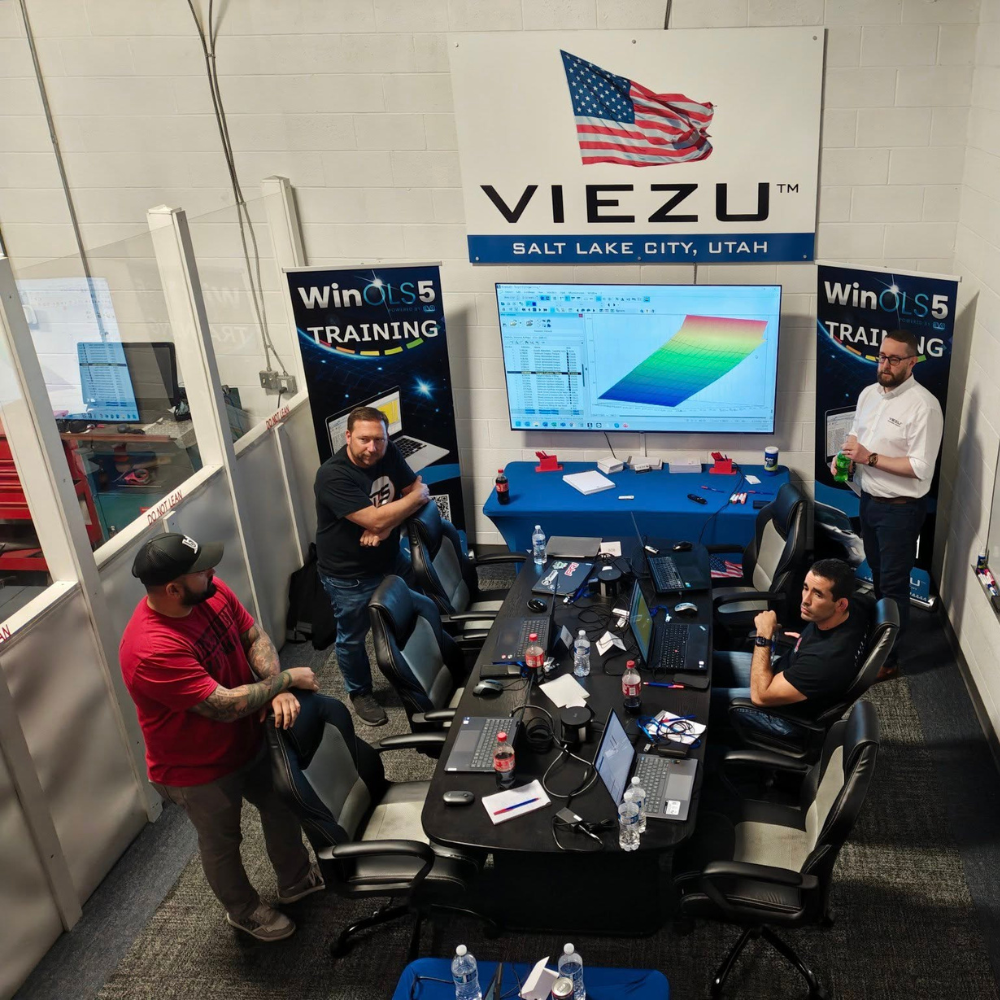
Alientech ECM Titanium 3.0: Gasoline Tuning Online Course
Alientech ECM Titanium 3.0 Diesel Tuning Course Online
How to Tune a Gasoline ECU with StageX
Vehicle Tuning Trends 2025 Frequently Asked Questions
Take a look at questions we often get asked about vehicle tuning trends 2025.
How do different vehicle tuning regulations around the world impact how I should source or write tuning files?
Compliance is one of the most important factors of professional vehicle tuning. What is legal in one country, isn’t legal in another, which is why a ‘one-file-fits-all’ approach won’t work because what is perfectly legal in a racing context is usually illegal for road use. To keep things safe and profitable, there are two main concepts you need to get your head around.
1. The Risks of Emissions Hardware Removal
You see a lot of aggressive tuning files—often known as “de-cat” or “delete” tunes—that require physically stripping out anti-pollution kits like the Diesel Particulate Filter (DPF) or the Catalytic Converter. The tuner then has to write code to stop the ECU from noticing these parts are missing. While this might increase flow, it tends to create levels of pollution that are likely illegal.
- The Specific Laws You Must Know
Using a file that deletes these systems exposes you to some pretty serious penalties and the specifics depend on where the car is actually driven:
- In the UK: Under Regulation 61a of the Road Vehicles (Construction and Use) Regulations, it is an offence to use a vehicle modified to emit more pollution than designed. Removing a DPF is pretty much a guaranteed MOT failure and could even invalidate the owner’s insurance.
- In the USA: The EPA Clean Air Act is strict about “defeat devices.” Writing or installing a tuning file that bypasses emissions controls is a federal offense and you could end up with a fine up to $45,000 per vehicle.
- In Europe: Strict homologation rules mean cars generally have to match their original emissions certificate.
The Impact on Your Business
Because of this legal landscape, downloading a generic file from the internet is not recommended, especially if you don’t have the tools, knowledge and skills to understand the changes and the impact that they will have on the vehicle. If you unintentionally put a “track-only” file onto a customer’s daily driver, you could end up liable for their fines and legal trouble.
Professional tuning training helps you to navigate this. It ensures that you know how to create emissions-compliant files that give you maps that deliver power and torque without you needing to remove hardware or break the law. If you are looking to source tuning files, always go to a reputable company like VIEZU.
Does “Eco-Modding” and economy tuning mean the same thing?
Even though “eco-modding” and economy tuning sound similar and can be heard interchangeably, they do have some slight differences.
- Economy tuning refers specifically to adjusting the vehicle’s software (an ECU remap) for better miles per gallon (MPG), whereas
- ‘Eco-modding’ includes ECU remaps as well as physical modifications such as reducing the vehicles weight with lighter parts, making aerodynamic tweaks and other physical changes that will maximise fuel efficiency.
What are the technical challenges of tuning for ‘longevity’ rather than peak horsepower?
Tuning for longevity requires you to have a deep understanding of component tolerances rather than just pushing the vehicle’s limits. It involves keeping turbo pressures within the manufacturer’s efficiency islands and ensuring Air-Fuel Ratios (AFR) remain safe to prevent thermal spiking. The goal is to smooth out flat spots and improve driveability, which often puts less strain on the transmission and drivetrain than a jagged, high-peak power curve.
How do I ensure my tuning business stays compliant with tightening international regulations?
The best way to stay compliant is to stay up-to-date with the laws and regulations in the countries you tune vehicles for. As laws change and vehicles become more complex, insurance and warranty providers will increasingly look for evidence of professional competence. Accredited training like that provided by the VIEZU Technical Academy demonstrates a verified standard of work which is crucial for protecting your business liability and reassuring end clients.
About The Author
Paul Busby is the CEO of the VIEZU Technical Academy and a passionate automotive expert. As an experienced vehicle engineer Paul has specialised in post-production defect investigation, new vehicle homologation and warranty development at a manufacturer level. His business acumen and dedication to the industry led to him winning Entrepreneur of the Year in 2012 and The Queen’s Award for VIEZU in 2014. When he’s not leading the business, Paul can often be found in the VIEZU workshop with his car or showing customers the incredible F-Type Predator 670 BHP.


